

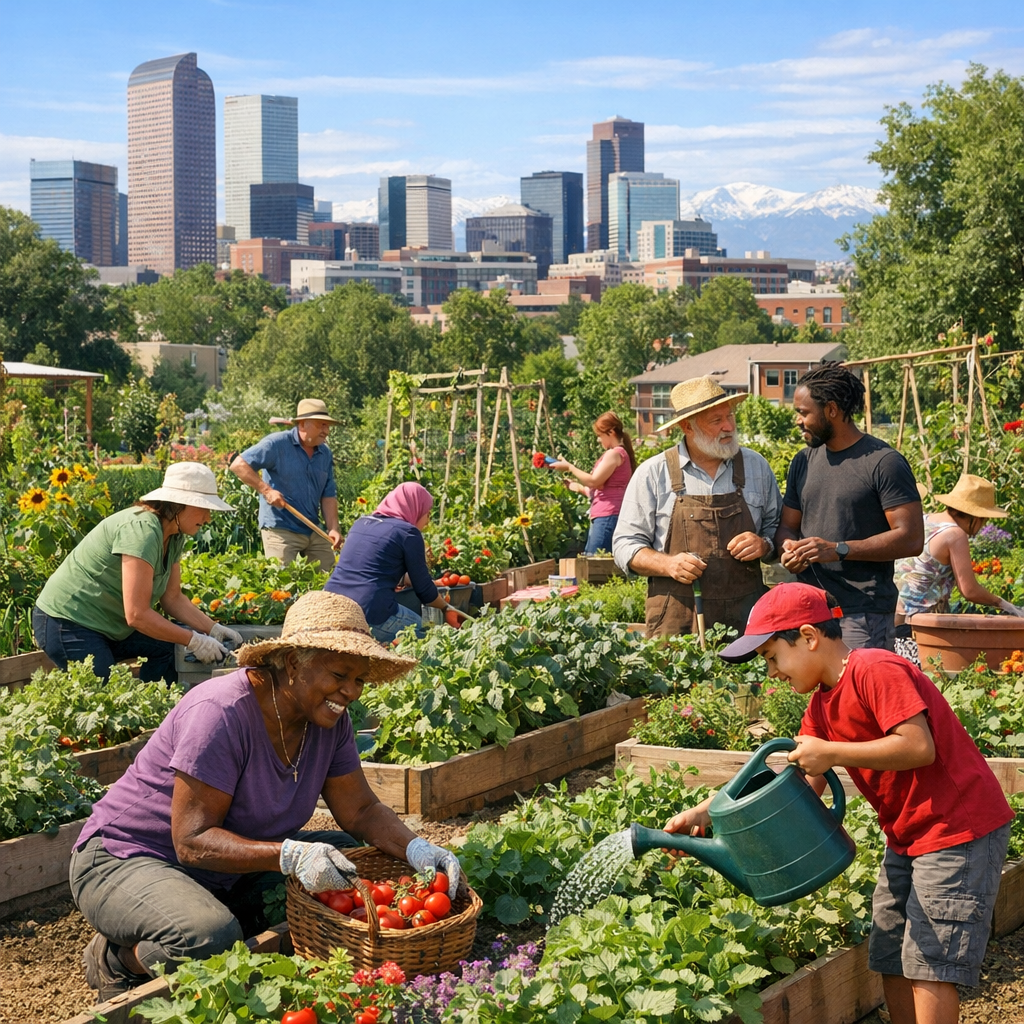
In the heart of Denver, amidst the urban landscape, community gardens have emerged as vital spaces where residents come together to cultivate not just plants, but also relationships and a sense of belonging. These gardens offer more than fresh produce; they serve as hubs for education, sustainability, and community engagement.
The Growth of Community Gardens in Denver
Denver Urban Gardens (DUG), established in 1978, has been at the forefront of this movement. With over 200 community gardens and food forests across seven counties in the metro area, DUG provides residents with the resources and support needed to grow their own food and foster community connections. These gardens vary in size and structure but share a common goal: to transform neighborhoods through shared green spaces.
Notable Community Gardens
Several community gardens stand out for their contributions to Denver’s urban agriculture:
Auraria Campus Community Garden
Located at North Speer Blvd. and Saint Francis Way, this garden offers local food production and community building opportunities for students, faculty, staff, and community members. It features an ozone garden, weather station, and is a registered pollination garden.
DU Bridge Community Garden
Established in 2009 and situated at 2320 S. Race Street, this garden includes 45 raised beds, a permaculture garden, a tool shed, a greenhouse, and a community compost system. It promotes a sense of community through shared interest in gardening.
Rosedale Community Garden
Founded in 1976, Rosedale is one of the largest DUG members, spanning 3 acres with 100 full-size plots. Located near the intersection of Iliff and Logan, it has been a cornerstone of community gardening for nearly 50 years.
Benefits Beyond Gardening
Community gardens in Denver offer numerous benefits:
- Food Access: They provide fresh, healthy produce to residents, promoting food sovereignty and healthier diets.
- Education: Gardens serve as outdoor classrooms, teaching sustainable practices and environmental stewardship.
- Community Building: Shared gardening spaces foster social connections, reducing feelings of isolation and strengthening neighborhood ties.
- Environmental Impact: Green spaces improve soil quality, reduce urban heat, and enhance biodiversity.
Getting Involved
For those interested in joining a community garden, DUG offers resources and support. Prospective gardeners can find a nearby garden and learn about plot availability by visiting DUG’s website. Participation often involves a small annual fee, with options for financial assistance to ensure inclusivity.
Denver’s community gardens exemplify the power of collective effort in creating sustainable, vibrant urban spaces. They remind us that by working together, we can cultivate not only food but also a stronger, more connected community.