

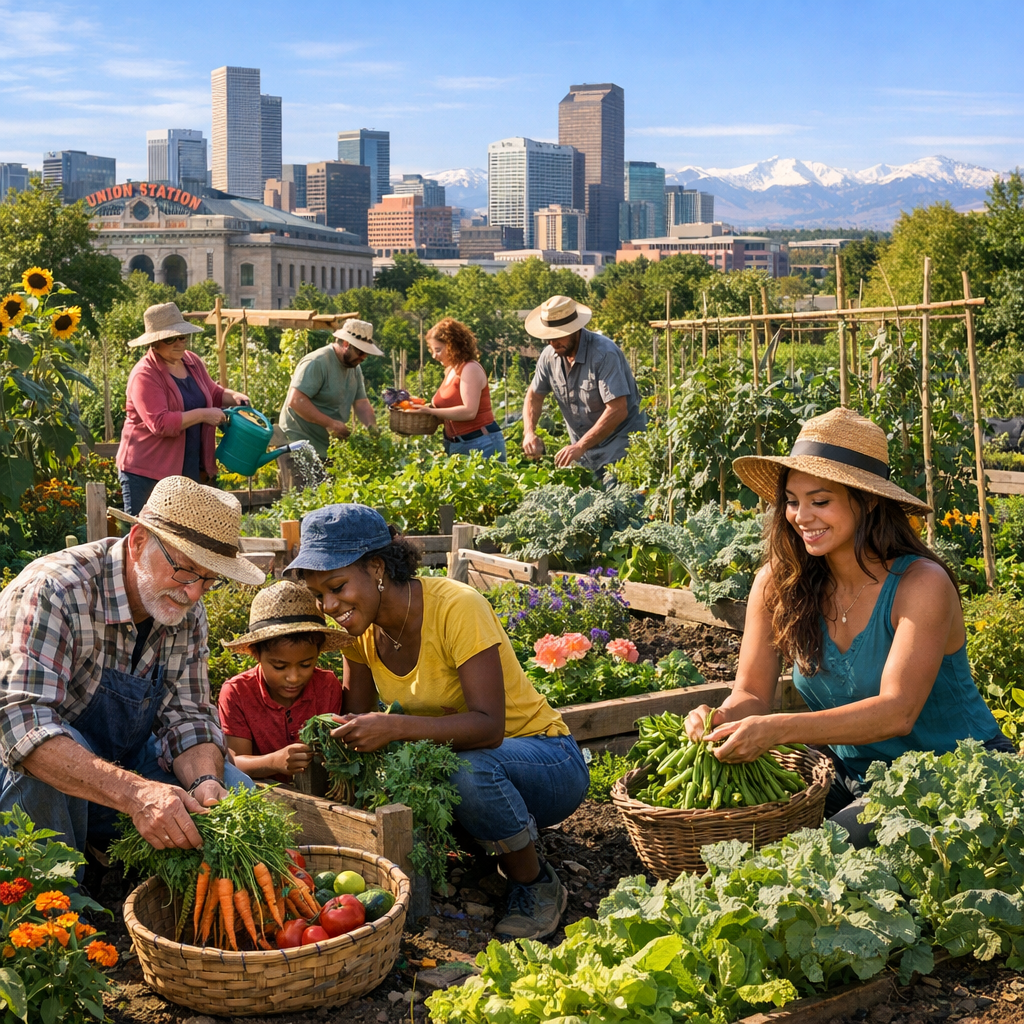
In the heart of Denver, amidst its bustling streets and towering buildings, lie verdant spaces where community and cultivation intertwine. These community gardens are more than just plots of land; they are vibrant hubs where residents come together to grow food, share knowledge, and strengthen neighborhood bonds.
The Roots of Denver’s Community Gardens
The inception of Denver’s community gardening movement dates back to the late 1970s. A group of gardeners in the Northside neighborhood collaborated to create a space for local Hmong women to cultivate their own food. This initiative transformed a vacant parking lot into the Pecos Community Garden, laying the foundation for what would become a city-wide movement. By 1985, Denver Urban Gardens (DUG) was formally established to support residents in creating sustainable, food-producing community gardens. Today, DUG oversees over 200 community gardens and food forests across the metro area, each serving as a testament to the city’s commitment to urban agriculture and community building.
More Than Just Gardening
These gardens offer more than fresh produce. They serve as communal spaces where individuals from diverse backgrounds converge, fostering a sense of belonging and mutual respect. For instance, the Rosedale Community Garden, founded in 1976, spans three acres and hosts 100 full-size plots. As a member of DUG, Rosedale has been a cornerstone of community engagement for nearly five decades, embodying the vision of connecting people to the earth and each other.
Similarly, the DU Bridge Community Garden, established in 2009 and located at 2320 S. Race Street, provides 45 raised beds, a permaculture garden, and a community compost system. Managed by the University of Denver, this garden promotes community through shared interest in cultivation, welcoming students, faculty, alumni, and neighbors alike.
Educational and Environmental Impact
Beyond fostering community ties, these gardens play a pivotal role in education and environmental stewardship. The Auraria Campus Community Garden, in collaboration with DUG, offers local food production and research opportunities for students and community members. Located at North Speer Blvd. and Saint Francis Way, the garden features an ozone garden, weather station, and is a registered pollination garden, serving as a living laboratory for sustainable practices.
Moreover, the Counterpath Community Garden, situated at 7935 E. 14th Ave., invites all to participate in gardening activities and share in the harvest. Since 2016, it has been a space where visitors to the weekly food bank can also engage in cultivation, reinforcing the link between food security and community involvement.
Joining the Movement
For those interested in becoming part of this thriving community gardening movement, numerous opportunities abound. Denver Urban Gardens offers resources and support for individuals looking to join existing gardens or start new ones. Additionally, the Denver Botanic Gardens’ Community Garden at Congress Park provides 89 plots maintained by families and community members, with excess produce donated to food banks and other distribution programs.
In essence, Denver’s community gardens are more than just spaces for cultivation; they are the heartbeats of neighborhoods, nurturing connections, promoting education, and enhancing the urban environment. As these gardens continue to flourish, they remind us of the power of community and the simple joy of growing together.