

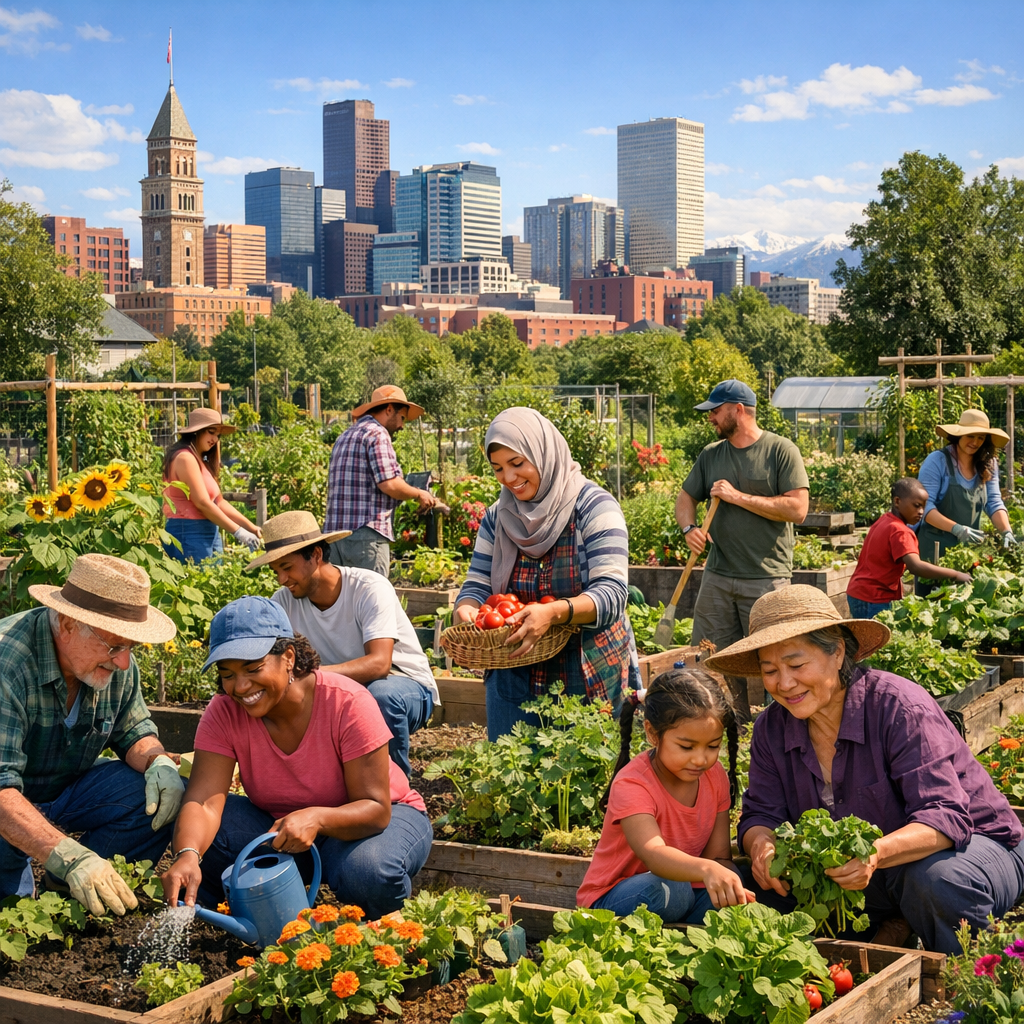
In the heart of Denver, amidst the urban landscape, community gardens have emerged as vital spaces where residents come together to cultivate not only plants but also relationships and a sense of belonging. These gardens offer more than just fresh produce; they serve as hubs for education, sustainability, and community engagement.
The Growth of Community Gardens in Denver
Denver Urban Gardens (DUG), established in 1985, has been at the forefront of this movement, stewarding approximately 200 community gardens and food forests across seven counties in the metro area. Their mission is to increase access, skills, and resources needed to grow food in community settings, thereby regenerating urban green spaces. DUG’s gardens are diverse, reflecting various sizes, organizational structures, and community cultures. Each garden is managed by volunteer leaders and cultivated by community members who care for individual plots while sharing responsibilities for communal areas. Notably, DUG gardeners commit to donating 10% of their harvest each growing season, supporting local food banks and community organizations.
Spotlight on Local Community Gardens
Several community gardens in Denver exemplify the city’s commitment to urban agriculture and community building:
Auraria Campus Community Garden
Located at North Speer Blvd. and Saint Francis Way, the Auraria Campus Community Garden collaborates with Denver Urban Gardens to offer local food production, community building, and research opportunities for students, faculty, staff, and community members. The garden features an ozone garden, weather station, and is a registered pollination garden.
DU Bridge Community Garden
Established in 2009 and currently directed by Dr. Julie A. Morris, the DU Bridge Community Garden includes 45 raised beds, a permaculture garden, a tool shed, a greenhouse, and a community compost system. Its mission is to promote a sense of community through shared interest and participation in cultivating a garden.
Rosedale Community Garden
Founded in 1976, Rosedale Garden is the second-largest Denver Urban Gardens member, spanning 3 acres with 100 full-size plots. Located adjacent to Harvard Gulch Park, it has been a cornerstone of the community for nearly 50 years, supporting DUG’s vision of a sustainable urban future.
Benefits Beyond Gardening
Community gardens in Denver provide numerous benefits beyond the cultivation of plants. They offer educational opportunities, promote food sovereignty, and enhance climate resilience by regenerating urban green spaces. These gardens also foster deep social connections, reducing feelings of loneliness and providing a safe, welcoming environment for all participants.
Getting Involved
For those interested in joining a community garden, DUG offers a comprehensive garden directory to help identify gardens that align with individual needs and locations. Prospective gardeners can contact garden leaders to inquire about available plots and the registration process.
Denver’s community gardens are more than just spaces for growing food; they are vibrant centers of community engagement, education, and environmental stewardship. By participating in these gardens, residents contribute to a healthier, more connected, and sustainable urban environment.